Books
Double-entry books, kept balanced by everything else you do.
What it does
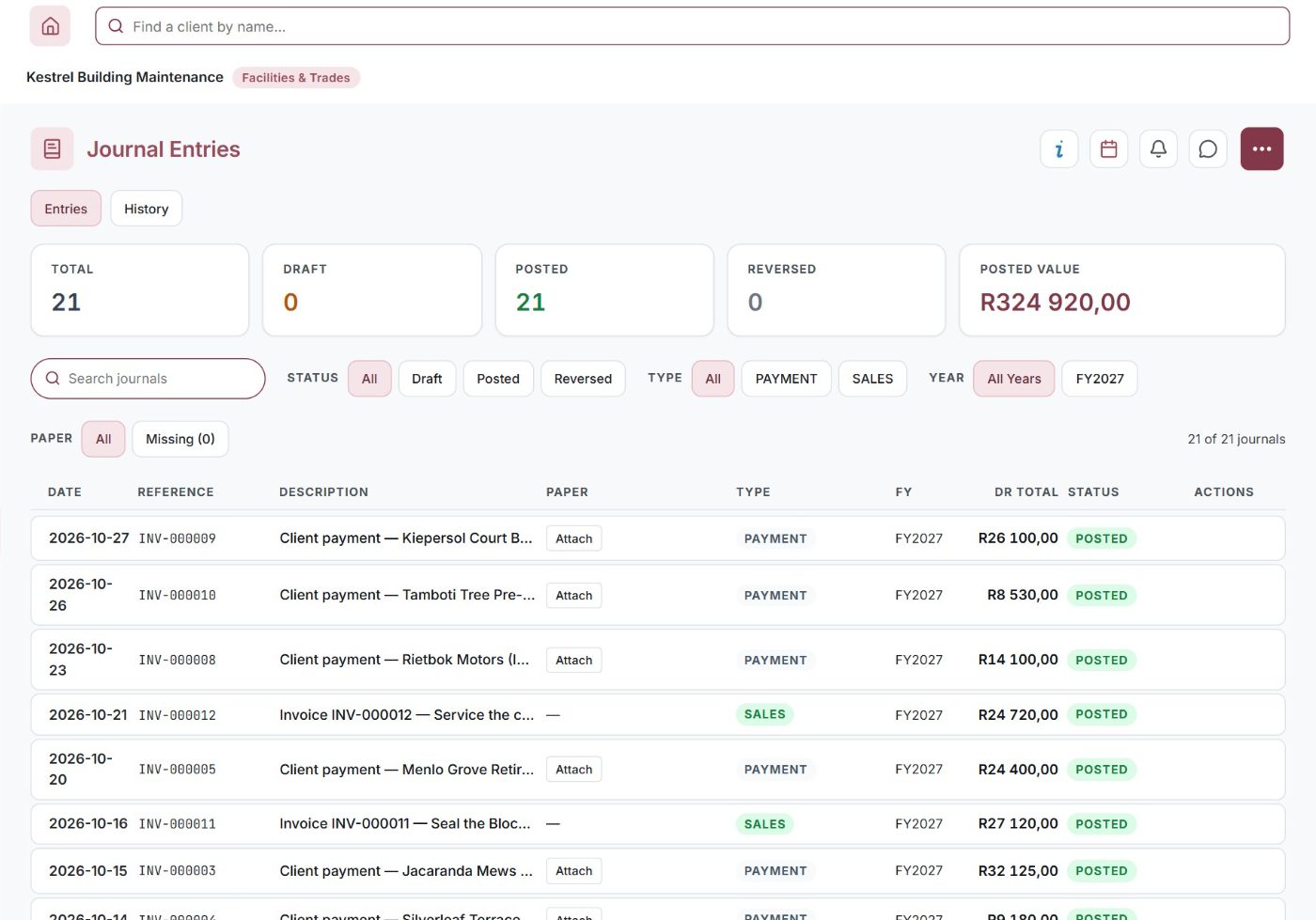
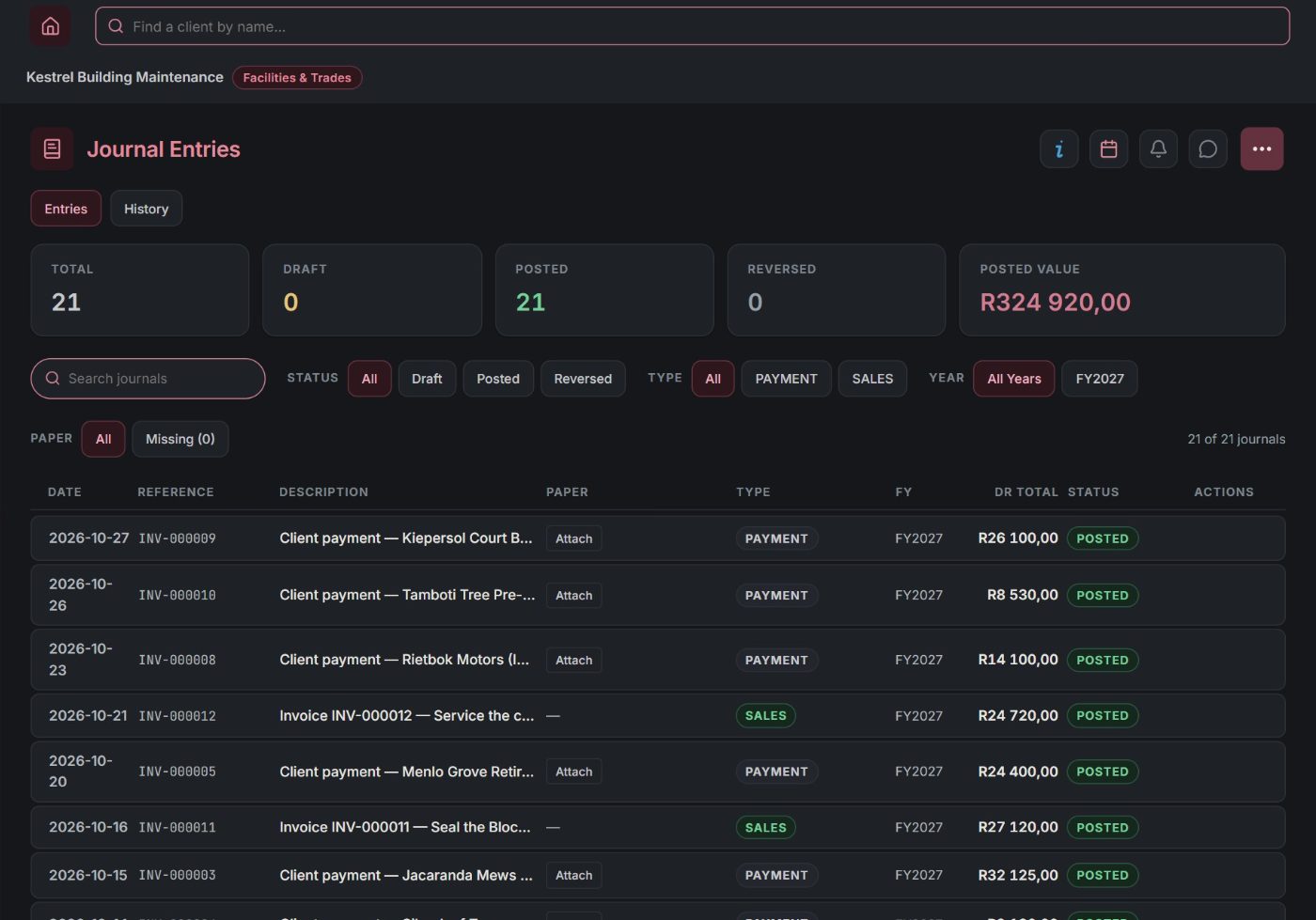
- Every sale, invoice, bill and bank line writes its own journal entry. Nobody types a journal for an ordinary day
- Double-entry, always: an entry whose debits and credits differ is refused by the database, whichever screen wrote it
- Profit & loss, balance sheet, journals and your chart of accounts, always up to date
- A manual journal for accruals and corrections, posted only when it balances
- Fixed assets with depreciation
- Close the year and the result moves to retained earnings, the year is archived as issued and every entry in it locks; reopening needs a reason
- Financial statements and notes, signed by your accountant
- The trial balance with every journal line, a year at a time, as an Excel workbook: your books are yours, screen by screen, and go with you if you leave